The Truth Behind “I Hate the Dentist”
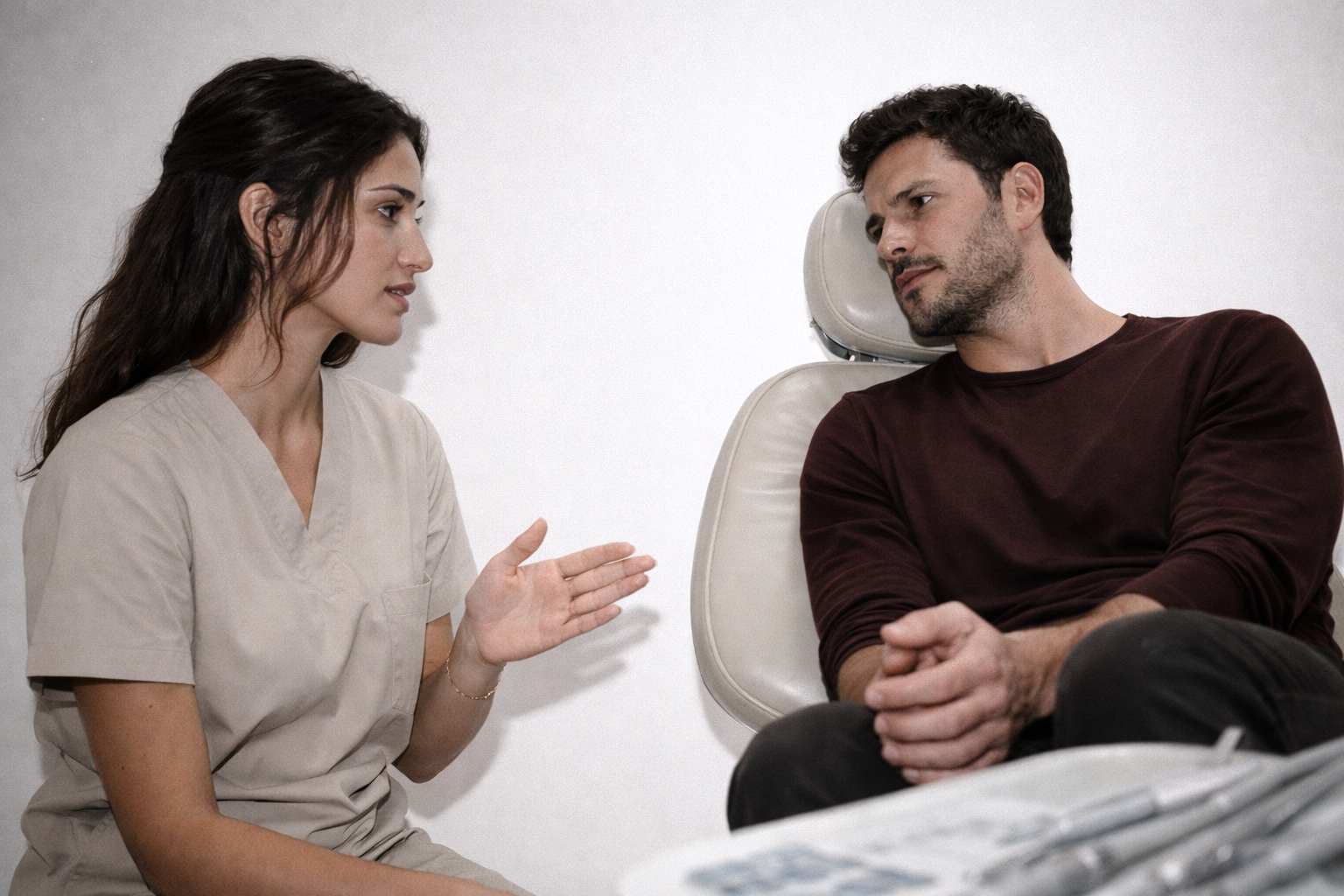
By Dr. Erin Sheffield
If you’ve ever been told, “I hate the dentist” (and I know you have, more times than you can count), this message is for you.
Face it. Being a dentist in 2026 feels harder than ever. With low insurance reimbursement rates, high patient distrust, inflation, and a carousel of rotating staff, burnout seems to be at an all-time high.
So when I tell you it’s time to add another technique to your practice, believe me, I can hear the groans.
But what if I told you a few tweaks to your current routine could transform the experience for both your patients and your team? Would you be willing to invest a few moments of your already jam-packed schedule?
This is where we return to the familiar phrase, “I hate the dentist,” because it is actually a signal pointing toward the topic at hand: Trauma Informed Care (TIC).
Trauma Informed Care in Dentistry
Trauma Informed Care is taking over conversations in healthcare and business, yet it has not adequately infiltrated dentistry. If it was ever needed anywhere, it is in our chair. And for my OMS colleagues, I am talking about a very different kind of trauma than the kind we treat with plates and screws.
Most of us think of what is commonly called “Big T” trauma. Life-threatening events such as violence, war, severe illness, and debilitating accidents. However, more common experiences referred to as “Little t” trauma include emotionally distressing events like difficult breakups, job loss, bullying, or loneliness.
Trauma is less about the inciting event and more about the lasting psychological impact. And those effects are widespread.
Patients who have experienced multiple potentially traumatic events have higher risks of poor childhood dental care, caries, periodontitis, fungal and viral oral infections, and fewer dental visits as adults. We also know trauma fundamentally changes brain anatomy and physiology, often leading to chronic hypervigilance, learning and memory challenges, and long-term health conditions.
Many of the behaviors we label as “difficult patients” are actually signs of unresolved trauma.
Rethinking the Dental Phobic Patient
For most of us, the “dental phobic” patient is routine. But even patients without overt fear can struggle in the dental environment.
Survivors of sexual assault, patients with anxiety disorders, and individuals with mood disorders are more likely to experience distress during dental visits.
Once we recognize these behaviors as symptoms rather than character flaws, our ability to manage and support patients changes dramatically.
Now, when I hear “I hate the dentist,” my ears perk up. I know there is work to do.
Changing the Clinical Mindset
The first shift is internal.
Instead of asking, “What’s wrong with you?” I now ask, “What happened to you?”
Burnout is often the first thing to push compassion out the window. Shifting from frustration and defensiveness to curiosity and empathy feels like a hard reset.
The next step is asking better questions. For example:
- “Was there something in the past that makes this difficult for you?”
- “Is there anything you can share that could make this appointment easier?”
Follow these with supportive responses. Replace “It could have been worse” with “That sounds scary” or “That must have been really hard.”
Not every patient is ready to share, but many are.
A Patient Story That Changed My Approach
Recently, a patient began her appointment by saying, “I’m the worst dental patient.”
Normally, I would reassure her quickly and move on. This time, I paused and asked, “Is there a reason dental visits are difficult for you?”
What she shared next stopped me cold.
Over fifty years ago, her brother walked her to frequent dental appointments where she was repeatedly abused by her dentist. When she finally told her mother, the dentist was arrested, imprisoned, and later killed by other inmates.
After hearing her story, my entire approach shifted. By the end of the visit, she was genuinely happy with her extraction.
We will not know every patient’s story. But statistics tell us most people carry invisible weight. Recognizing this improves patient outcomes and protects our own emotional well-being.
The Ethical Responsibility of Modern Dentistry
We have all encountered the “dental cripple,” the patient unable to tolerate or complete treatment. It is easy to blame previous providers, but we must also acknowledge our own role.
Not because we do not care, but because dentistry and life are hard.
If we can avoid causing new harm, I believe that is our ethical responsibility. And selfishly, when patients feel supported, they become more cooperative, more compliant with treatment plans, more likely to attend appointments, and more willing to recommend your practice.
There is no better review than:
“I always hated the dentist, but Dr. Sheffield is the best.”
Practical Trauma Informed Strategies
Here are simple ways to reduce re-traumatization and improve patient care.
Be a Trauma Investigator
Look for signs of distress. Many behaviors we label as difficult are trauma responses.
Get Curious
Ask open-ended questions like:
“Is there anything we should know to provide the best care today?”
You are not their therapist, but you can be a powerful listener.
Give Patients Control
Return to pediatric fundamentals: Tell, Show, Do.
Let patients raise a hand to pause treatment. Explain sensations before they happen.
Consider the Physical Environment
The reclined position, multiple people near the face, and lack of personal space can be triggering. Limit unnecessary staff traffic, allow support persons when appropriate, and consider leaving doors partially open.
Address Behavior Directly and Gently
Statements like:
“You seem nervous. Is there anything I can do to help?”
or
“You seem uncomfortable answering questions. Can you tell me what’s going on?”
often shift patients out of fight-or-flight and back into collaboration.
Redefining “Do No Harm”
Doing no harm is more than technical excellence. It includes emotional and psychological safety.
Dental fear remains one of the most common phobias in the United States. That gives us daily opportunities to either reinforce fear or reduce it.
So the next time you hear “I hate the dentist,” do not roll your eyes.
Use it as a reminder.
To listen better.
To slow down.
To lead with empathy.
And to practice dentistry in a way that truly heals.
If you would like, I can also prepare the Ghost excerpt, reading time blurb, SEO meta description, or carousel version for this article.