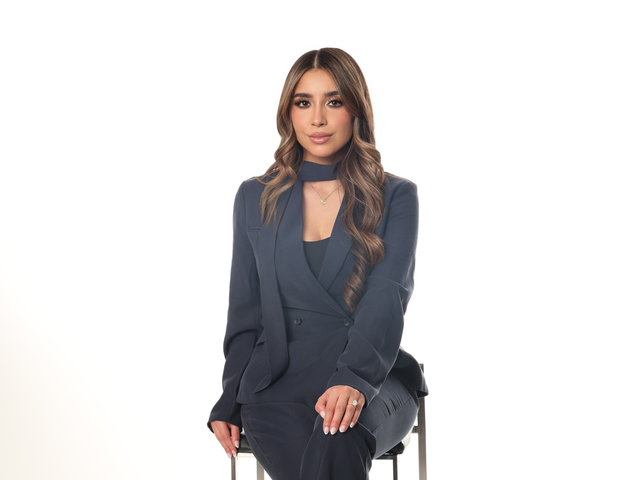
The New Cosmetic Dentist Aesthetics, digital workflows, and the future of accessible beauty. Crystal Barekzai, DDS The Standard I entered dentistry at a time when the profession was already changing. Digital scanners were replac- ing traditional impressions, patients were arriving with saved Instagram photos and highly specific aesthetic references, and cosmetic consultations were no longer just about teeth. More often, they were about confidence, identity, self-perception, and how someone felt seeing themselves in photos, on video, in a world where image is constantly on display.
That shift has shaped the way I see cosmet- ic dentistry. THE NEW COSMETIC DENTIST I did not come into this field through legacy or proximity. I am the daughter of immigrants, build- ing my path without family in the profession, with- out a ready-made network, and without the men- torship pipeline that makes certain careers easier to navigate. I also moved from Canada to the United States and had to create opportunities in unfamiliar environments rather than inherit them.
That expe- rience made me observant, resourceful, and inten- tional. It also made me deeply aware that many younger dentists are adapting in real time, in a pro- fession evolving faster than ever. For my genera- tion, cosmetic dentistry does not feel like a niche layered onto traditional practice. It feels like part of a broader cultural shift.
Today's patients often arrive already fluent in the language of aesthetics. They know what veneers are. They understand composite bonding. They ask about no-prep options, smile design, and facial har- mony.
Many have spent months studying transfor- mations online before they ever sit down for a con- sultation. More than once, a patient has told me they first noticed their smile not in the mirror, but while replaying a video of themselves speaking. That awareness is a gift. Patients are more engaged, ask better questions, and are deeply invested in the outcome.
But it also introduces new complexity. Patients are informed not only by real clinical out- comes, but by filters, edited images, and an online visual culture that blurs the line between inspira- tion and reality. The modern cosmetic dentist has to do far more than present treatment options. We have to educate, translate, and guide.
This is where digital workflows have trans- formed the consultation experience. Intraoral scan- ning, digital smile design, and same-day visualiza- tion tools make the conversation more collabora- tive and more transparent. They allow patients to move from a vague idea to something they can actu- ally see and respond to, creating a shared language between clinician and patient. To me, the greatest advantage of digital dentistry is not speed.
Aesthetic dentistry is also moving away from a single definition of beauty. For years, cosmetic treatment was associated with one recognizable look: very white, highly uniform, perfectly symmet- rical, instantly noticeable. But increasingly, patients are asking for something more refined. They want results that look elevated rather than cookie-cutter.
A smile that enhances the face rather than over- powers it. I believe this is one of the healthiest changes happening in our field. It asks us to think beyond brightness and pay closer attention to tex- ture, translucency, facial proportions, lip support, phonetics, age, style, and individuality. A beautiful result is not always the brightest or boldest one.
Sometimes it is the most harmonious one. I am most drawn to smiles that feel alive, smiles with di- mension, smiles that respect facial character, smiles that do not erase individuality in pursuit of perfec- tion. I believe that the dentist who can create a nat- ural, deeply personalized result will always stand apart from the dentist who simply knows how to make teeth look expensive. “The greatest advantage of digital dentistry is not speed. CRYSTAL BAREKZAI, DDS One of the most interesting developments in our field is the growing conversation around digital fab- rication and more accessible cosmetic treatment pathways.
Those conversations matter. Cosmetic dentistry has historically been aspirational and, for many patients, out of reach. If new technologies can reduce barriers and expand access to aesthetic care, that has real value. But accessibility also forces a deeper question: if cosmetic dentistry becomes faster and more available, what will define truly ex- ceptional care?
Technology can improve workflows, streamline processes, and open new possibilities, but it cannot create judgment. It cannot replace the instinct to preserve enamel, the discipline to priori- tize function, or the artistic sensitivity required to design a smile that truly fits the patient in front of you. As treatment becomes more democratized, true excellence may no longer be defined by materi- al category or price point. It may be defined by in- tentionality, customization, and thoughtfulness.
That is where artistry becomes more important, not less. Cosmetic dentistry is powerful because it changes more than teeth. It can change the way a person carries themselves, the way they smile in photographs, the way they show up socially and professionally. That emotional weight is exactly why it demands ethical restraint.
Not every patient needs more treatment. Not every aesthetic request should be fulfilled exactly as presented. In a culture that rewards immediacy and visual extremes, the modern cosmetic dentist has to know when to slow things down, when to redirect unrealistic expecta- tions, when to choose a more conservative ap- proach, or when to protect a patient from pursuing THE NEW COSMETIC DENTIST a result that does not align with their biology, func- tion, or long-term health. For younger clinicians, this tension is real.
Social media celebrates dramat- ic transformations and rapid results. But dentistry is still rooted in biology. It is still a profession of longevity, restraint, and consequence. Learning to navigate that tension is one of the defining respon- sibilities of the new cosmetic dentist.
I believe the next generation of cosmetic dentists will be defined less by the procedures they offer and more by the way they think. We are not just clini- cians. We are educators, designers, translators, and at times protectors of perspective. We help patients articulate what they want, understand what is pos- sible, and choose treatments that align with health, function, and identity — not only aesthetics.
Digital tools will continue to evolve. Materials will improve. None of that will eliminate the need for human judgment. If anything, it will make that judgment more valuable.
I entered this profession during a period of rapid change, without a legacy path laid out in front of me. That has shaped the way I think about innova- tion, beauty, and care. I do not take opportunity for granted. And I do not believe beautiful dentistry should be reduced to trends.
The future of cosmetic dentistry is not about replacing artistry with tech- nology. It is about using technology to deepen com- munication, elevate precision, and create more per- sonalized care. The most meaningful results will never come from a machine alone. They will come from the ability to listen carefully, think critically, and create with both intention and restraint.
That is the future of aesthetic dentistry I believe in. Crystal Barekzai, DDS Dr. Crystal Barekzai is a USC-trained cosmetic and restorative dentist with a special interest in aesthetic smile design and individualized smile transformations. Known for her thoughtful, detail- oriented approach, she is passionate about patient education, oral health, and creating personalized results that feel both elevated and deeply personal.